Nigeria’s construction landscape is undergoing a profound metamorphosis. Across Lagos, Abuja, Port Harcourt, and emerging regional corridors, infrastructure expansion is no longer aspirational—it is operational. Highways stretch into previously inaccessible territories. Residential estates rise in peri-urban districts. Industrial parks materialize alongside transport arteries. This accelerated development requires more than manpower and capital; it demands logistical precision, material consistency, and operational agility.
Within this environment, portable concrete plants have emerged as pivotal enablers. Their mobility, efficiency, and technological sophistication are transforming how concrete is produced and deployed. No longer confined to centralized facilities, concrete production is migrating directly to project sites, recalibrating timelines and redefining cost structures. The implications for Nigeria’s construction boom are substantial and enduring.
1. Nigeria’s Construction Expansion and the Demand for Agile Infrastructure
1.1 Urbanization, Infrastructure Deficits, and Project Acceleration
Nigeria’s demographic trajectory is unmistakable. With one of the fastest-growing urban populations globally, the demand for residential housing, transport networks, and commercial facilities continues to intensify. Megacities such as Lagos strain under population density, while secondary cities rapidly evolve into industrial nodes. This expansion generates unprecedented pressure on construction timelines.
Public and private stakeholders are compelled to accelerate delivery cycles. Road rehabilitation, bridge construction, airport upgrades, and energy infrastructure projects operate under stringent deadlines. Delays are not merely inconvenient; they are economically detrimental. Every stalled project compounds congestion, inflates costs, and erodes investor confidence.
In such an environment, construction methodologies must evolve. Traditional supply chains—characterized by stationary concrete plants servicing dispersed sites—struggle to meet the tempo required. What is needed is adaptability. Speed. Autonomy. Portable batching plants respond precisely to this exigency by relocating production closer to demand, thereby aligning output with project velocity.
1.2 Limitations of Traditional Concrete Supply Models
Conventional ready-mix operations rely heavily on centralized batching facilities. While effective in stable urban zones with established infrastructure, this model reveals structural weaknesses when deployed in Nigeria’s diverse terrain. Transportation bottlenecks, fluctuating fuel prices, and deteriorating road conditions frequently disrupt delivery schedules.
Concrete, by its nature, is time-sensitive. Prolonged transit diminishes workability and may compromise compressive strength. Traffic congestion—common in metropolitan corridors—exacerbates this risk. Moreover, remote infrastructure projects often lie beyond the practical radius of stationary plants, necessitating costly logistical improvisations.
The cumulative effect is inefficiency. Idle labor. Equipment downtime. Material wastage. These frictions inflate project budgets and undermine operational predictability. The construction sector, increasingly performance-driven, cannot afford such systemic drag. A decentralized, site-centric solution becomes not merely advantageous, but indispensable.
2. Portable Batching Plants: Engineering Mobility and Operational Precision
2.1 Modular Design and Rapid Deployment Capabilities
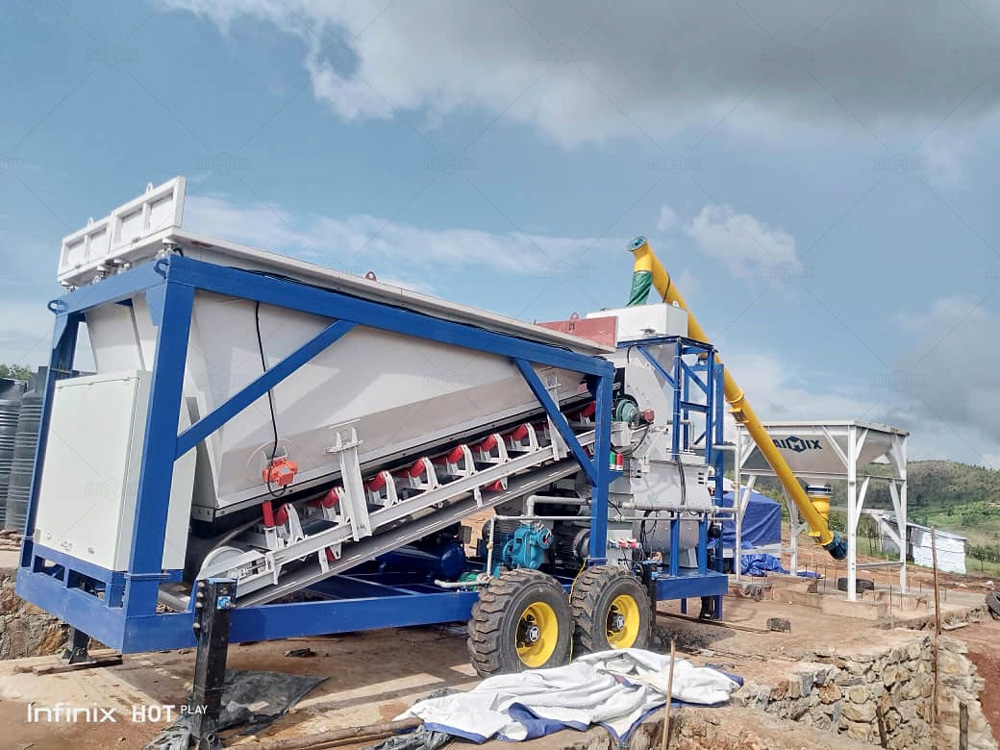
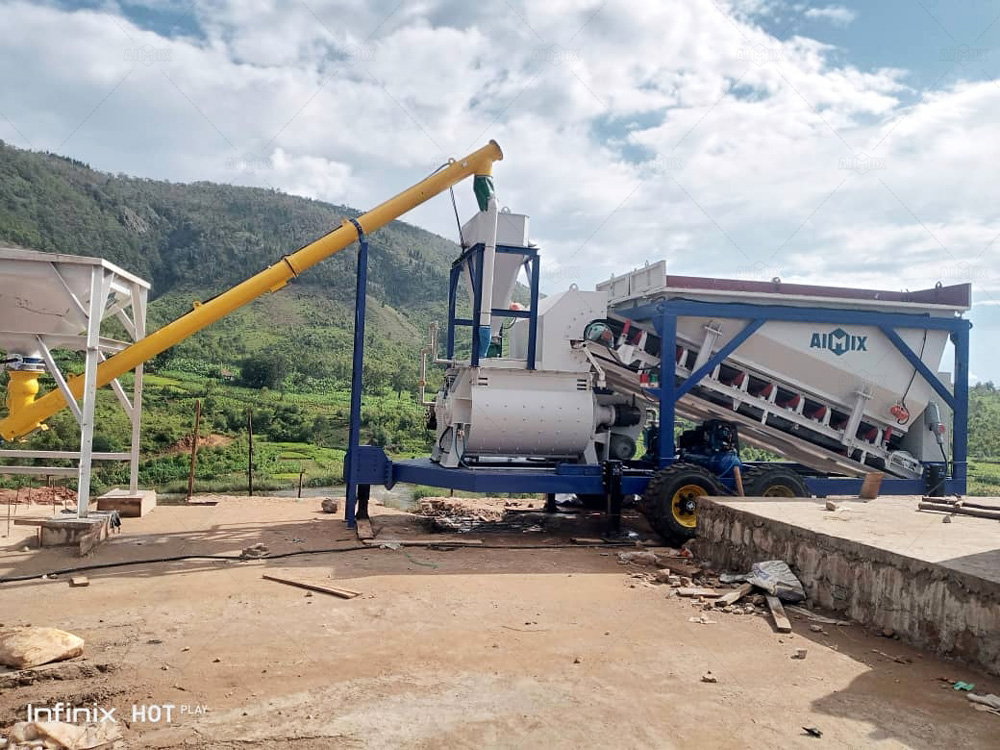
Portable batching plants are engineered with modular architectures that facilitate swift assembly and disassembly. Components are pre-configured for transport, often mounted on trailers or compact frames, enabling relocation with minimal civil preparation. Foundation requirements are reduced. Commissioning timelines contract dramatically.
This mobility introduces strategic elasticity. Contractors can reposition equipment in accordance with project phases, ensuring that concrete production remains proximal to active work zones. For road construction stretching across hundreds of kilometers, this capability is transformative. The mobile batching plants move as the project advances.
Rapid deployment also mitigates preliminary capital strain. Instead of investing in permanent infrastructure, firms can operationalize temporary yet highly efficient production units. This approach is particularly advantageous in Nigeria’s evolving regional markets, where project pipelines may fluctuate in intensity and duration.
2.2 Quality Control, Automation, and On-Site Efficiency
Modern portable batching plants are not rudimentary mixers; they are technologically sophisticated systems. Integrated control panels, programmable logic controllers, and digital monitoring interfaces ensure precise proportioning of aggregates, cement, water, and admixtures. The result is consistent batch integrity.
Automation reduces human error. It enhances repeatability. It also enables real-time calibration adjustments to accommodate environmental variables such as humidity and temperature—factors that are especially pertinent in Nigeria’s varied climatic zones.
On-site production eliminates dependency on external supply schedules. Concrete can be produced exactly when required, in quantities aligned with daily progress metrics. This synchronicity minimizes queuing delays and optimizes labor utilization. Crews pour, cure, and proceed without interruption. Productivity compounds incrementally, day after day.
https://youtu.be/cbBi1CUZ-_U?list=PLTf51eYOmIl_3hj6SoMmX91vDjjYetfSy
3. Strategic Advantages: Economic, Logistical, and Competitive Impact
3.1 Cost Optimization and Reduced Material Waste
Financial prudence is central to sustainable expansion. Portable batching plants deliver tangible cost efficiencies across multiple vectors. Transportation expenses diminish significantly when raw materials—often sourced locally—replace long-haul ready-mix deliveries. Fuel consumption declines. Fleet maintenance burdens ease.
Material wastage is curtailed through precise batching controls. Overproduction, a common issue in centralized supply models, is minimized. Excess concrete—frequently discarded due to setting constraints—becomes a rarity. The economic implications are substantial.
Furthermore, reduced reliance on third-party suppliers enhances budgetary transparency. Contractors gain direct oversight of input consumption and output yield. This granular visibility strengthens financial forecasting and mitigates exposure to volatile market pricing.
3.2 Enabling Project Scalability and Market Competitiveness
Beyond immediate cost savings, small concrete plants confer strategic leverage. Firms equipped with mobile production capabilities can pursue geographically dispersed projects without establishing permanent infrastructure in each location. Market reach expands. Operational risk diversifies.
Scalability becomes attainable. During peak construction cycles, additional portable units can be deployed to amplify output. Conversely, during downturns, assets can be reallocated or temporarily decommissioned without incurring prohibitive overhead.
This flexibility enhances competitive positioning. Contractors capable of guaranteeing consistent concrete quality, accelerated timelines, and cost control are better positioned to secure public tenders and private developments. Reputation strengthens. Portfolio breadth widens.
In Nigeria’s dynamic construction ecosystem, success is increasingly contingent upon adaptability and operational intelligence. Portable batching plants embody both. They are not merely equipment; they are catalysts. By bridging logistical gaps, enhancing quality assurance, and compressing project durations, they are fueling a construction boom that extends from site to sustained success.