Across Indonesia, small commercial buildings are everywhere. From neighborhood shops and mini markets to light industrial warehouses and storage facilities, these projects move fast and operate on tight budgets. For many contractors and investors, one key question keeps coming up: can a 40 m³/h concrete mixer pump(pompa mixer beton) really handle this kind of work efficiently?
The short answer is yes. But the real value lies in understanding why it works, when it fits best, and how it supports both construction efficiency and cost control. Let’s break it down from a contractor’s perspective and look at real construction needs in Indonesia.
Understanding The Real Needs Of Small Commercial Projects In Indonesia
Before choosing any concrete equipment, it helps to look at the project itself. Small commercial buildings are very different from high-rise towers or large infrastructure works.
In most Indonesian cities and industrial zones, shops and warehouses usually range from one to three floors. The concrete demand stays stable but not massive. Projects often run in phases. Access roads can be narrow. Labor availability can change from week to week.
Because of this, contractors need equipment that stays flexible. They need steady output, not extreme capacity. They need easy operation, not complex systems. Most importantly, they need reliable concrete delivery without wasting material or time.
With this background in mind, it becomes easier to see where a 40 m³/h concrete mixer pump fits into the picture.
Why 40 m³/h Is A Practical Capacity For Shops And Warehouses
Capacity often sounds like a technical detail. In reality, it directly affects project rhythm and cost control.
A 40 m³/h concrete mixer pump can produce and pump concrete continuously. For small commercial buildings, this capacity matches the daily pouring volume very well. It avoids the problem of overproduction. At the same time, it keeps the site moving without long waiting periods.
More importantly, this output supports common structural elements such as columns, beams, floor slabs, and foundations. For a typical shop or warehouse, daily concrete demand often falls between 20 and 80 cubic meters. A 40 m³/h pompa beton can easily cover this range within normal working hours.
As a result, contractors gain better control over scheduling. Concrete pours become predictable. Delays caused by supply gaps are reduced.
Matching Output With Real Pouring Speed
In practice, pouring speed depends on formwork readiness and labor coordination. A higher-capacity pump does not always mean faster work. In fact, too much output can create congestion on site.
A 40 m³/h mixer pump balances production with placement. It allows crews to work smoothly. Concrete flows steadily. The risk of cold joints also drops because the pouring process stays continuous.
How A Concrete Mixer Pump Simplifies On-Site Operations
After capacity, the next concern is operational efficiency. Many small commercial projects operate on limited space and manpower.
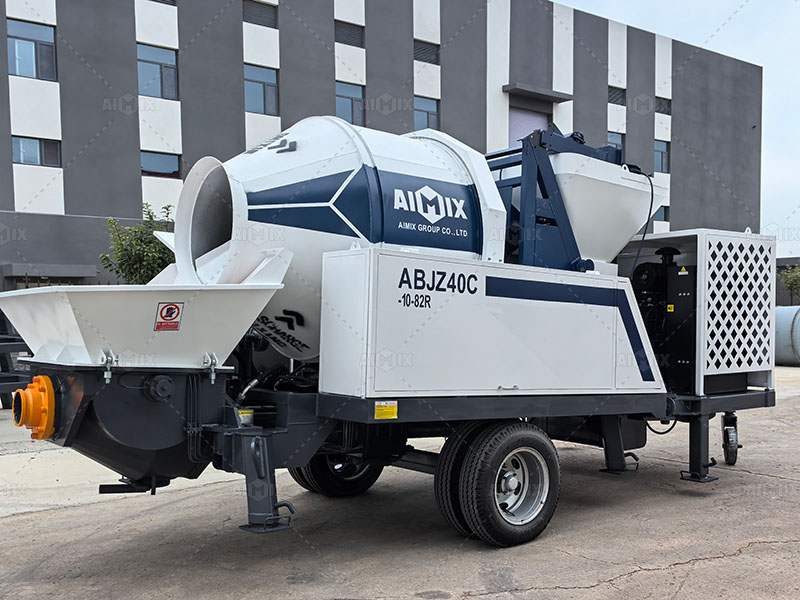
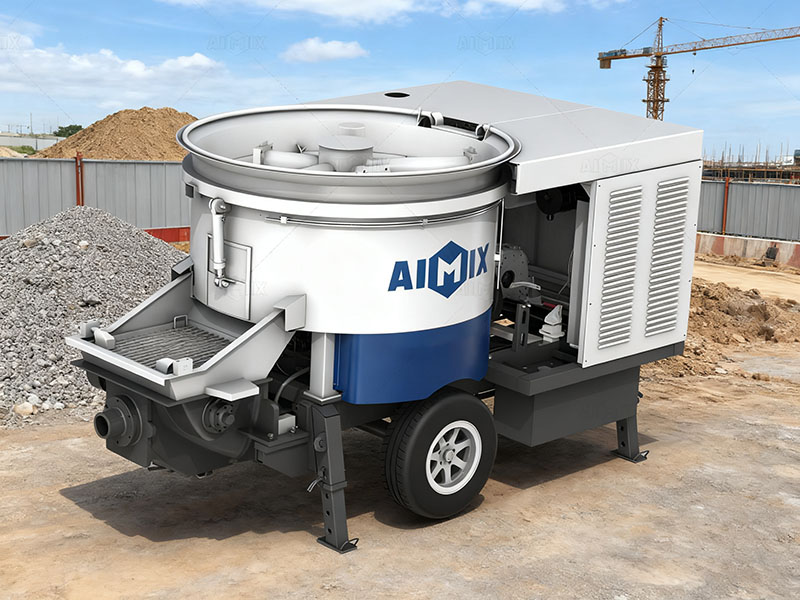
This is where a concrete mixer pump shows clear advantages. It combines mixing and pumping in one machine. That means fewer machines on site. It also means fewer transfer steps for concrete.
Instead of relying on multiple mixers, wheelbarrows, or cranes, contractors can feed raw materials directly into the hopper. The machine mixes and pumps concrete straight to the pouring point.
As a result, site organization becomes simpler. Labor allocation becomes more efficient. Supervision becomes easier.
Better Adaptation To Tight Job Sites
Many shops and warehouses in Indonesia sit along busy roads or inside industrial parks. Space is often limited.
A 40 m³/h portable concrete mixer pump usually comes with a compact footprint. It fits into tight areas more easily than larger pumping systems. This flexibility allows contractors to set up closer to the structure, reducing pipe length and pressure loss.
Because of this, pumping remains stable even when access conditions are not ideal.
Cost Control And Investment Efficiency For Contractors
Cost is always a decisive factor. For small commercial buildings, margins matter.
A 40 m³/h concrete mixer pump offers a strong balance between price and performance. The initial investment stays lower than larger pumping systems. At the same time, operating costs remain manageable.
Fuel consumption stays reasonable. Wear parts last longer because the machine does not run at extreme output levels. Maintenance routines stay simple and predictable.
For contractors who handle multiple small to medium projects each year, this type of machine quickly pays for itself.
Reducing Dependence On Ready-Mix Supply
In some regions of Indonesia, ready-mix supply can be inconsistent. Delivery delays and minimum order quantities can increase costs.
With a concrete mixer pump, contractors gain more independence. They can mix concrete on demand. They can adjust mix ratios based on project requirements. They can avoid wasted concrete.
This flexibility improves profit margins and reduces project risk.
Concrete Quality And Structural Reliability
From an engineering perspective, quality matters just as much as speed.
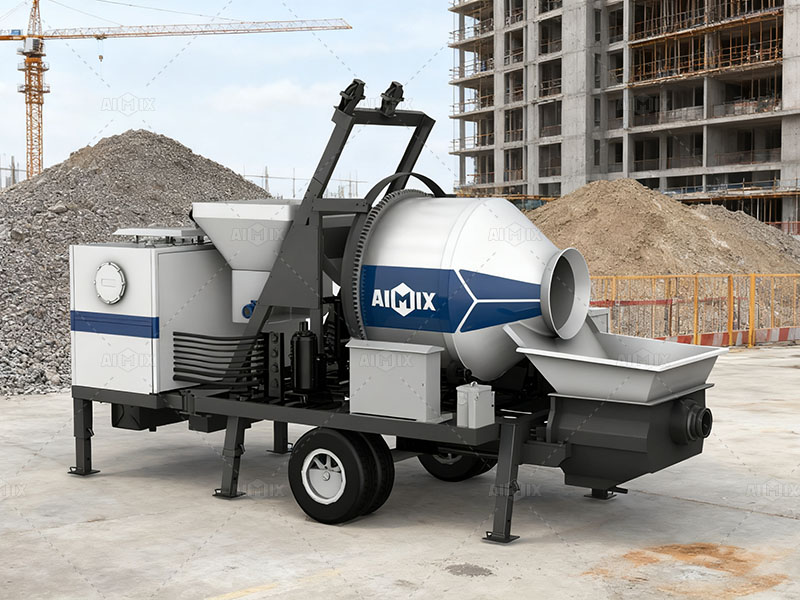
A 40 m³/h diesel concrete mixer pump ensures uniform mixing. Materials blend evenly before pumping. This consistency supports better compressive strength and surface finish.
For shops and warehouses, this directly affects structural safety and long-term durability. Floors resist cracking better. Columns and beams gain more reliable strength.
Because the mixing process happens on site, quality control becomes more transparent. Contractors can monitor material input and mixing time closely.
Who Should Choose A 40 m³/h Concrete Mixer Pump?
Not every project needs the same solution. However, a 40 m³/h concrete mixer pump makes the most sense for specific users.
It suits small to mid-sized contractors who focus on shops, warehouses, workshops, and similar commercial structures. It also fits developers who build multiple low-rise units each year.
Additionally, it works well for contractors expanding from residential projects into light commercial construction. The learning curve stays short. Operation remains straightforward.
Final Thoughts: Is It The Right Choice For Your Next Project?
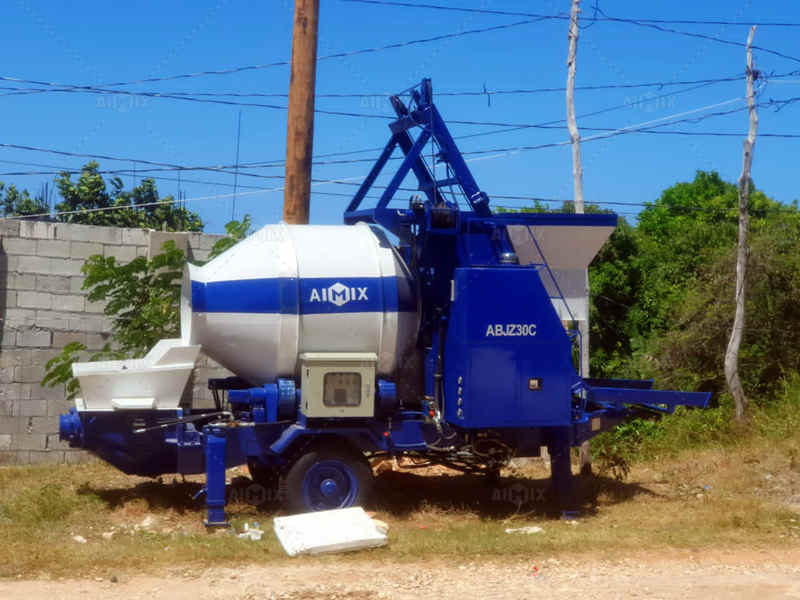
When you look at real construction conditions in Indonesia, the answer becomes clear. A 40 m³/h concrete mixer pump offers enough capacity, strong flexibility, and solid cost efficiency for small commercial buildings.
It supports steady workflows. It adapts to tight sites. It helps contractors control quality and budget at the same time.
If you plan to build shops or warehouses and want a practical concrete solution, this type of mixer pump deserves serious consideration.
Choosing the right equipment is not just about numbers. It is about matching your machine to your project reality. When capacity, site conditions, and budget align, your construction process becomes smoother from start to finish.
If you are exploring concrete mixer pump solutions for small commercial projects in Indonesia, now is a good time to evaluate your options and move forward with confidence.